

Before you begin
A project with a screenplay. Complete Quick Start first if you are still setting up.
What you’ll make
An Inspiration collection and an analysis you can use to brief your lookbooks.
Analyze your screenplay
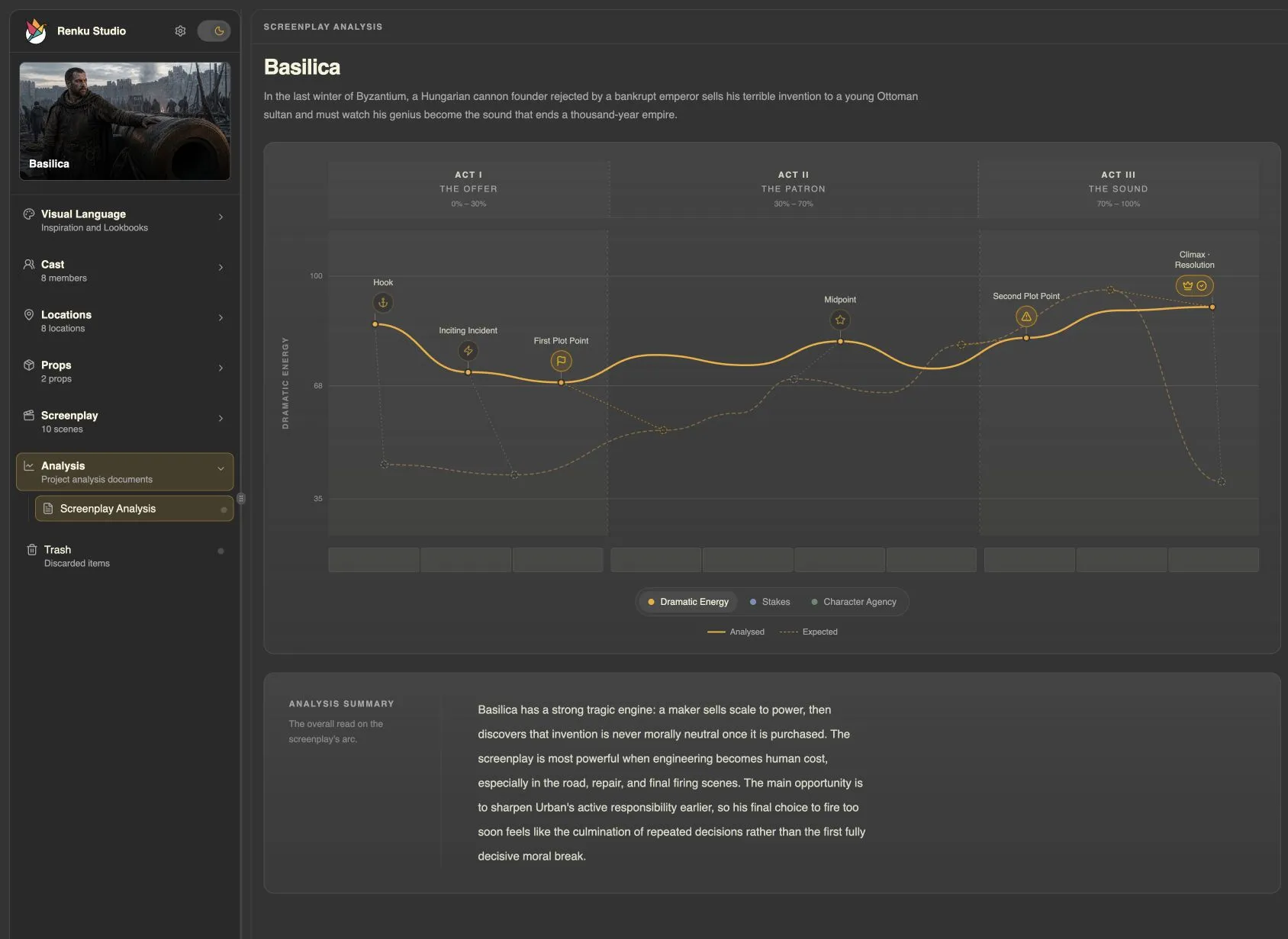
The Screenplay Analyst skill reads the screenplay and creates a saved three-act critique. Its standard analysis covers dramatic structure, key story beats, and scores for Dramatic Energy, Stakes, and Character Agency; it does not rewrite the script.
- Ask Codex to analyze your screenplay. The skill handles the analysis, validation, and saving a new active revision.
- Open Analysis > Screenplay Analysis in Studio to review the chart and written critique. You can add a question such as “Pay particular attention to whether the ending resolves the central conflict.”
- Choose a scene to develop through this tutorial. If you would like help choosing, ask Codex to suggest a manageable starting point.
Analyze my screenplay.
Collect with a question in mind
Start with the feeling of one scene. Collect film stills, photographs, paintings, or your own reference images that help you explore its light, framing, color, and atmosphere.
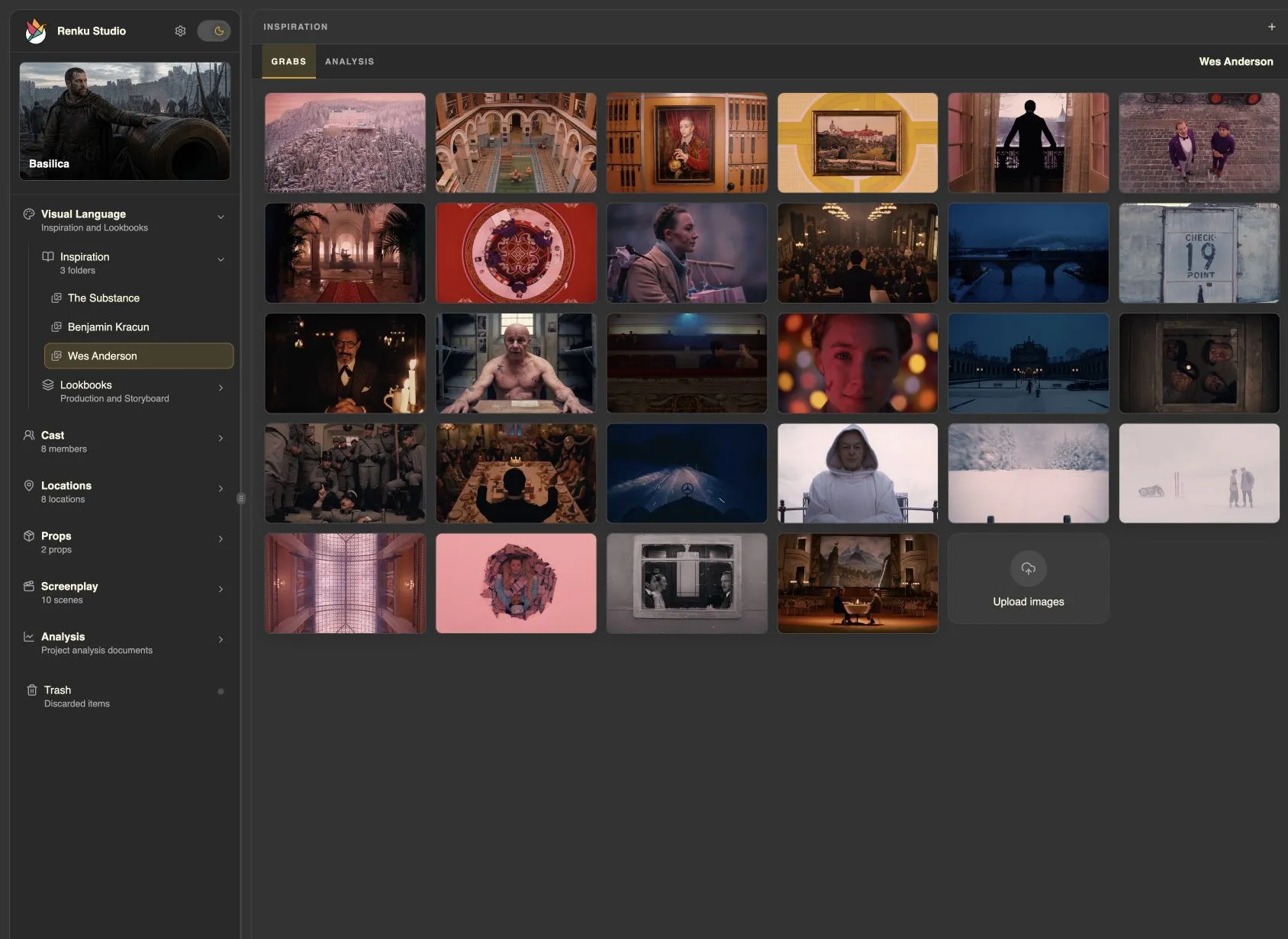
- In Studio, open Visual Language > Inspiration and choose New Folder. Give it a useful name, such as “Wes Anderson” or “Harbor at dawn,” then choose Create.
- Open the folder and drag image files onto the Grabs area. You can also choose Upload images to select files from your computer. Use sources you have permission to use.
- Review the images together in the Grabs tab, as in the Wes Anderson collection above. Keep the references that support your intended direction. Once the collection is ready, ask Codex to analyze it in the next step.
Analyze your inspirations
The Inspiration Analyzer skill studies the images in your folder as a visual collection. It uses the folder name as a reference hint and automatically covers the visual thesis, palette, tone and mood, composition, lighting, texture, and visual affinities, with observations grounded in the images.
- Open the Inspiration folder in Studio and ask Codex to analyze it. The skill inspects the supported images, writes the complete analysis, and saves it to the folder.
- Switch from Grabs to Analysis to read the result alongside your references. You do not need to list the analysis categories or ask the agent to save its work.
- Add your own questions or refine the emphasis through conversation. For example: “Also examine how doorways and windows frame the characters,” or “Go deeper on the use of negative space.”
Analyze this inspiration folder.
Before moving on
Your Inspiration Analysis is saved and reviewed. Next, use the collection and analysis as sources for your project’s lookbooks.